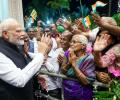
Prime Minister Narendra Modi's visit to Sri Lanka is expected to yield at least 10 ambitious outcomes, including a defense cooperation agreement and frameworks for deeper engagement in the energy sector. The visit comes at a time when Sri Lanka is recovering from an economic crisis, with India providing significant financial assistance. Modi and Sri Lankan President Anura Kumara Dissanayake will also dedicate several projects built with India's assistance and virtually inaugurate the Sampur solar energy project.
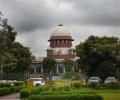
The Supreme Court of India has ordered all high courts to ensure that civil courts under their jurisdiction decide execution petitions within six months, failing which presiding officers will be held accountable. The court cited the significant delay in resolving such petitions, which are filed to enforce decrees in civil disputes, and noted that this delay undermines the purpose of the decree itself. The verdict stems from a 1980 civil dispute from Tamil Nadu, highlighting the long-standing issue of delayed execution proceedings in India's legal system.

Describing the conflict between Israel and Hezbollah as the deadliest in decades, Biden said lasting security for the people of the two countries cannot be achieved only on the battlefield.

'India has gone some way to meeting its objectives because it has established a deterrent value that Pakistan will have to take into account when it plans future terrorist attacks.'
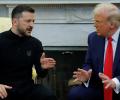
Russian officials and state media on Saturday celebrated United States President Donald Trump and his Ukrainian counterpart Volodomyr Zelensky's unprecedented clash at the White House.

The two sides are also likely to firm up a currency swap framework and seal several other agreements including one on debt restructuring following talks between Modi and Sri Lankan President Anura Kumara Disanayaka on April 5, people familiar with the matter said.
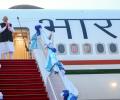
Prime Minister Narendra Modi is set to visit Sri Lanka, where he will hold talks with President Anura Kumara Dissanayake and strengthen ties through agreements on defence, energy security, and digitalisation. This visit aims to further bolster the already strong relationship between the two nations and is expected to include several outcomes, including a defence cooperation agreement, debt restructuring, and a currency swap. This visit comes at a time when Sri Lanka is recovering from an economic crisis, where India played a significant role in providing financial assistance.

China on Wednesday said it was opposed to the joint Indo-US military exercises being held near the Line of Actual Control (LAC), asserting that it violates the spirit of the two border agreements signed between New Delhi and Beijing.
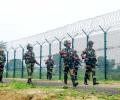
Bangladesh has summoned the Indian High Commissioner in Dhaka over border tensions, accusing India of violating a bilateral agreement by constructing fences at five locations along the Indo-Bangla border. The development comes after Bangladesh officials alleged that India had halted construction of barbed wire fencing due to strong opposition from the Border Guard Bangladesh and local residents.
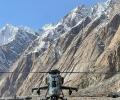
Defence sources stated that the disengagement involves removing infrastructure and withdrawing troops from both sides. The process is expected to be completed by Tuesday.
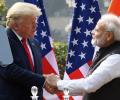
Prime Minister Narendra Modi and United States President Donald Trump on Monday vowed to work towards a 'trusted' partnership with a focus on boosting India-US cooperation in areas of trade, energy and defence in their first phone conversation since the American leader's inauguration last week.

The Ministry of External Affairs (MEA) has announced that India and China have reached an understanding to resume the Kailash Mansarovar Yatra in 2025. While an understanding has been reached, the modalities of the pilgrimage are yet to be firmed up. The Yatra has been suspended since 2020 due to the COVID-19 outbreak and non-renewal of Yatra arrangements by the Chinese side.

'What signal would we be sending -- that we don't stand by our friends?'

Following the disengagement, both sides will soon start the coordinated patrolling in their respective areas, sources added.
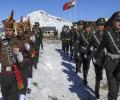
India on Monday announced it has reached an agreement with China on patrolling along the Line of Actual Control (LAC) in eastern Ladakh, in a major breakthrough in ending the over four-year-long military standoff ahead of a likely meeting between Prime Minister Narendra Modi and Chinese President Xi Jinping in Russia this week.
On February 25, 2021, India and Pakistan announced that they have agreed to strictly observe all agreements on ceasefire along the Line of Control in Jammu and Kashmir and other sectors.

The government of India has signed a peace agreement with a tribal insurgent group from Assam, United People's Democratic Solidarity.
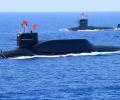
China has delivered a second advanced submarine to Pakistan, part of a larger deal to bolster the South Asian nation's naval capabilities in the Indian Ocean. The move underscores China's growing influence in the region and its strategic partnership with Pakistan.
The Iraqi Prime Minister said that personnel of the country's national intelligence service, working with coalition forces commanded by the United States, had killed the head of Islamic State in Iraq and Syria.
Pakistan has warned the international community that any military moves by India shall be 'responded to assuredly and decisively... onus of any escalatory spiral and its consequences shall squarely lie with India.' Implicit in the statement is a veiled threat that even a nuclear threshold may be reached if push comes to shove, warns Ambassador M K Bhadrakumar.
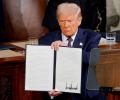
'Decline of the UN did not start with the Trump administration. It has been happening over the last two decades or more.'

India and China have agreed to work towards a "roadmap" for rebuilding mutual trust following the border standoff in eastern Ladakh, according to a statement from the Indian Defence Ministry. Defence Minister Rajnath Singh met with his Chinese counterpart Dong Jun in Vientiane, Laos, on the sidelines of a regional security conclave. Singh called for drawing lessons from the "unfortunate border clashes" of 2020 and emphasized the need for cooperation rather than conflict. Both sides agreed to work towards a roadmap for rebuilding mutual trust and understanding, and a meeting of the Special Representatives and Secretary-Vice Minister mechanism will also take place soon.
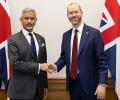
The UK has strongly condemned a security breach involving a pro-Khalistan extremist rushing towards External Affairs Minister S Jaishankar's convoy in London. The incident took place as Jaishankar was leaving the Chatham House think tank on Wednesday evening. The protester was swiftly taken aside by officers of the Metropolitan Police, with no arrests being confirmed so far. The UK said such attempts to "intimidate, threaten, or disrupt" public events are "completely unacceptable". The incident comes after Jaishankar's talks with UK Foreign Secretary David Lammy, during which both leaders covered the entire gamut of bilateral ties, including the relaunched Free Trade Agreement (FTA) negotiations, regional and global issues. The MEA has condemned the security breach and the provocative activities of the "small group of separatists and extremists", calling on the UK to "live up to their diplomatic obligations".

India and China held talks in New Delhi to discuss the lessons learned from the eastern Ladakh military standoff and prevent its recurrence. The two sides also prepared for the next meeting of the Special Representatives on the boundary question. The talks took place under the framework of the Working Mechanism for Consultation and Coordination on India-China Border Affairs (WMCC). Both sides highlighted the importance of regular exchanges and contacts at diplomatic and military level to maintain peace and tranquility in the border areas.
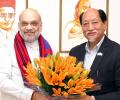
'People's expectations were very high.' 'We felt both sides had understood each other.' 'But the removal of Article 370 triggered apprehensions within the Naga people.'

China has violated border agreements, External Affairs Minister S Jaishankar said on Tuesday, noting that continued tension will cast a natural shadow over the rest of this relationship.
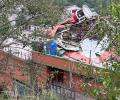
'Right now, we have no relationship with Pakistan. And the relationship with China is not great.'

'Once we deal with the disengagement, there is the larger issue as both of us have brought a very large number of troops up to the border.' 'So there is what we call the de-escalation issue, and then there is the larger, the next step is really, how do you deal with the rest of the relationship?'
China and India were able to "reduce differences" and build "some consensus" on disengaging troops from friction points to end the standoff in eastern Ladakh and agreed to maintain dialogue to reach a resolution acceptable to both sides at an "early date", the Chinese defence ministry said on Thursday.

The Indian Army has commenced a verification patrolling at Depsang, the second friction point in eastern Ladakh, the government said on Saturday.

The group waving separatist flags was barricaded and monitored by a significant police presence outside the venue on Wednesday night, with officers rushing to restrain the man as he ran past the barricade in an attempt to block the path of the minister's car pulling at an Indian flag.
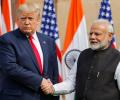
The China threat continues to resonate in the strategic partnership between India and the USA, points out Rup Narayan Das.
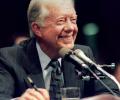
Carter was in politics, but not a politician, certainly not a transactional politician, points out Shreekant Sambrani.

Defence Minister Rajnath Singh on Thursday held talks with his Chinese counterpart Li Shangfu and is learnt to have discussed the lingering border row in eastern Ladakh.

Why can't the Indian government propose to the Chinese a corridor circumambulating the Holy Mountain where people from both sides could perform the yatra again? asks Claude Arpi.
Following a crucial round of talks between the UPDS leadership and Centre's peace interlocutors P C Haldar and Joint Secretary (Home) Sambhu Singh in New Delhi on Monday, the outfit's general secretary Haren Singh Bey informed the media that all the contentious issues had been resolved in the meeting and that the ball was now in the court of the government decide on signing of a peace accord.

The leaders also noted the "negative impacts" of the war in Ukraine with regard to global food and energy security, especially for developing and least-developed countries.

The Nagaland cabinet has decided to meet both the NSCN-IM and the Government of India to push for a resolution to the Naga political dialogue. This comes after the NSCN-IM threatened to return to the jungles due to delays in the resolution, and demanded third-party intervention. The Nagaland cabinet will meet with Union Home Minister Amit Shah in Delhi to press for expediting the negotiations. The NSCN-IM has accused the Centre of refusing to honour key provisions of the Framework Agreement, specifically the recognition of the "Naga national flag and constitution." The state cabinet is also scheduled to meet with the NSCN-IM leadership before their trip to Delhi.
Since negotiations are still ongoing, any report on possible solutions to various issues during the negotiations would only be speculative, the spokesperson said.

Assam Chief Minister Himanta Biswa on Tuesday said that the Centre is likely to sign a peace accord with militant organisations from the state's Adivasi communities within September.
